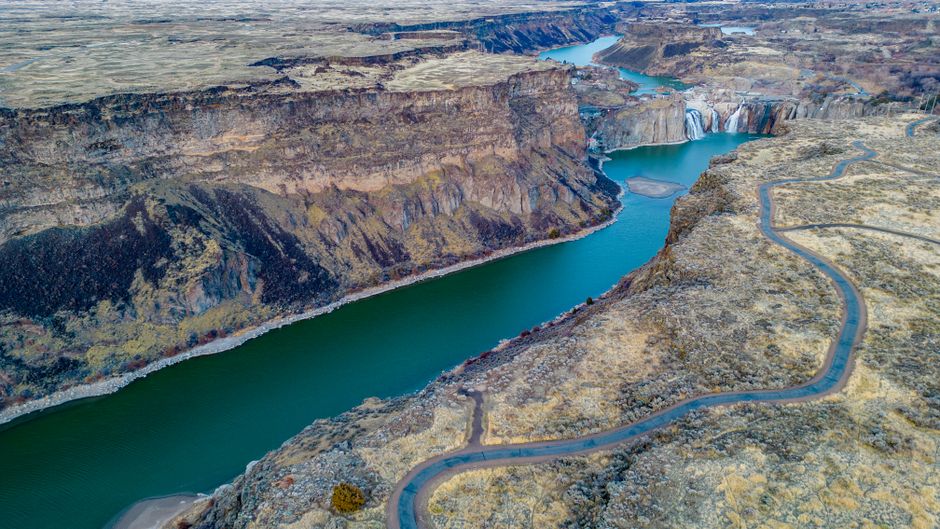
One of the first questions we get is simple: how deep are wells in Idaho? It is a fair thing to ask before you drill, and we wish we could give you one tidy number. The honest answer is that depth depends on where you stand. Southwest Idaho covers valley floor, foothills, and granite mountain country, and the water sits at very different levels across that range. Below we walk through what we typically see, why it varies so much, and what actually determines the depth on your property.
Typical well depths in southwest Idaho
Across the homes we drill, most domestic wells land between 100 and 400 feet, with mountain sites tending to go deeper. Down on the Treasure Valley floor, water is commonly reached somewhere around 50 to 300 feet, since the shallow aquifers there generally sit within the upper couple hundred feet of ground. That is a wide window, and it is meant to be. We would rather give you an honest range than a false promise.
The reason we cannot quote an exact figure for your lot is straightforward: nobody knows the real depth until the drill is in the ground. Two neighbors on the same road can hit water at noticeably different levels. So when someone asks how deep are wells in Idaho at their specific address, we point them to typical ranges and then to a free on-site look, because that is the only honest way to talk about it.
Why depth changes so much across the region
Geology is the big driver. On the valley floor you are drilling through layers of sediment that hold water in fairly predictable aquifers. Up in the mountain and granite country, like the Long Valley and McCall area and the upper reaches of Adams and Valley counties, water lives in fractures in the rock. Finding it is fracture-dependent, and those sites tend to run deeper. That is not bad news, it is just the nature of the ground up there.
Recharge matters too. Much of the valley’s groundwater starts as mountain snowpack. A slow, steady melt soaks into the ground and recharges the aquifers, while a light winter or a fast runoff leaves less behind. Dry years can lower shallow water tables, which is one more reason we hedge on exact numbers. The ground is a living system, not a fixed measurement.
If you want to know whether your county is one we cover, our service area page lays out the southwest and central Idaho counties we drill in. We are licensed in Idaho only, so everything here applies to Idaho ground.
What happens before we ever measure depth
Idaho law shapes the process before drilling starts. The state requires a drilling permit before construction, and for a single-family domestic well that runs through a Start Card handled by a licensed driller. The domestic well permit fee is $75, which is a state fee, not a charge from us. That $75 is the only firm dollar figure we will ever put in front of you, because well pricing depends on too many site factors to guess honestly. When you are ready, we give you a free estimate in person.
A couple of legal points worth knowing. In Idaho there is no homeowner or DIY exception, so a licensed driller has to do the work. That protects you, since a well drilled and cased correctly commonly serves 20 to 30 years or more. And after we finish, we file a driller’s report, the well log, with the state within 30 days of completion. Those logs are public and searchable, which is one of the better ways to see real depths near you.
There is also a water-use rule. A single home with up to a half acre of irrigation and use under 13,000 gallons a day is generally exempt from needing a separate water right. Newer rules can narrow this for some subdivisions in groundwater-stressed areas, so it is worth a conversation if you are building in a new development. For most families, though, a domestic well fits comfortably inside that exemption.
How long the drilling itself takes
Once the permit is in hand, the actual drilling of a typical residential well takes 1 to 3 days. The full path from permit to water is often around 2 to 4 weeks, depending on permitting and scheduling, so plan a little cushion rather than expecting water tomorrow. If you want to see how we approach a home well from start to finish, our residential well drilling page covers it in plain terms.
The short version: depth is a range, not a guarantee, and the smartest move is to look at real logs nearby and let us walk your property. We would rather set honest expectations than sell you a number we cannot stand behind.
FAQ
How deep are wells in Idaho on average? There is no single average that fits your lot. Across the homes we drill, most domestic wells land between 100 and 400 feet, with mountain sites deeper and Treasure Valley floor sites often shallower, commonly around 50 to 300 feet.
Can you tell me my well depth before you drill? Not exactly. Nobody can know the real depth until the drill is in the ground. We can share typical ranges and nearby well logs, then give you a free on-site estimate.
Do I need a permit and a licensed driller? Yes. Idaho requires a permit before construction (the domestic fee is $75), and there is no DIY exception, so a licensed driller has to do the work.